


Oxford EARTH welcomes four new Research Fellows
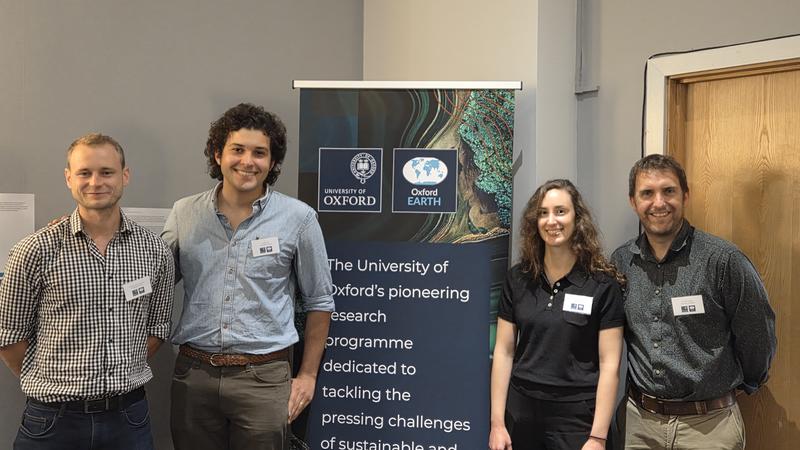
From improving our understanding of how critical minerals are concentrated within the Earth's crust to developing innovative technologies for carbon capture and advancing more equitable and sustainable resource governance, Oxford EARTH's newest Research Fellows are tackling some of the biggest challenges associated with the recovery of the critical resources needed for the energy transition. Meet the four researchers who have recently joined the programme.
We are delighted to welcome our four new Oxford EARTH research fellows. Covering four of the programme’s cognate disciplines, the fellows will drive the engine of innovation that is critical to the success of Oxford EARTH. Each brings a unique perspective to the challenges of resourcing our planet at a time of huge geopolitical and environmental turmoil
Professor Jon Blundy
Oxford EARTH Research Director
Meet the Research Fellows

Dr Emilie Bowman
Department of Earth Sciences
Emilie uses geochemistry, experimental petrology and thermodynamic modelling to understand how critical metals are distributed and concentrated within the Earth's crust. Her research focuses on the processes that control the formation of critical metal deposits and how these resources can be more effectively identified and sustainably recovered.
As part of Oxford EARTH, Emilie will investigate the movement and distribution of critical companion metals, including germanium and gallium, to improve resource security and support their recovery from both existing deposits and mine waste, helping to build a more secure, sustainable and circular supply of critical materials.

Dr Sophus zu Ermgassen
Department of Biology
Sophus is an ecological economist specialising in biodiversity finance, nature-positive organisations, biodiversity management for major infrastructure projects, and the environmental impacts of sand and construction mineral extraction. His research explores how economic systems and policies can better protect biodiversity while supporting the transition to Net Zero.
As part of Oxford EARTH, Sophus will investigate how biodiversity impacts from mining and critical mineral recovery can be reduced through effective mitigation policies, biodiversity credits and nature-positive approaches. His work aims to help ensure that the resources needed for the energy transition are sourced in ways that deliver better outcomes for both people and nature.

Dr Mark Hirons
Smith School of Enterprise and Environment
Mark is a social scientist specialising in environmental governance, with a particular focus on mining, agriculture and land use. Drawing on more than fifteen years of research in Sub-Saharan Africa and the UK, he examines how governance, power and community participation shape decisions about natural resources and their social and environmental outcomes.
As part of Oxford EARTH, Mark will investigate how governance, policy and justice can be embedded in the sustainable recovery of critical resources. His work aims to ensure that the transition to a low-carbon future delivers fair and equitable outcomes for communities, industry and the environment.
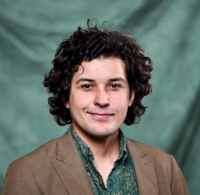
Dr Orion Farr
Department of Chemistry
Orion is an experimental geochemist and materials scientist whose research explores how naturally occurring minerals can drive electrochemical reactions relevant to carbon capture and the sustainable recovery of critical resources. By combining geochemistry, electrochemistry and materials science, he investigates how these minerals can inspire new solutions to global environmental challenges.
As part of Oxford EARTH, Orion will study how redox-active minerals can be used to capture and convert carbon dioxide while supporting the recovery of critical resources from mine waste. His work aims to develop nature-inspired technologies that contribute to a more sustainable, low-carbon future.
These appointments mark an important step in Oxford EARTH's continued growth, expanding the programme's expertise across the scientific, environmental and societal dimensions of critical resources. By bringing together researchers with expertise spanning critical minerals, biodiversity, environmental justice and carbon capture, Oxford EARTH is strengthening its ability to develop integrated solutions for the resource challenges of the energy transition. With a further Research Fellow from the Department of Engineering set to join the programme in September, Oxford EARTH's interdisciplinary research community continues to grow.

