


Listening for clues: using seismic noise to support mineral exploration
The search for new mineral deposits is becoming more pressing as demand for metals to support the energy transition grows.
Yet while more money is being invested in exploration, this has not translated into a corresponding rise in major discoveries, highlighting the need for new approaches.
New research from the University of Oxford explores how Ambient Noise Tomography (ANT) performed with novel, low-cost seismic sensors could support mineral exploration by using the Earth’s background seismic noise to reveal geological structures beneath its surface.
What sets Tobermory Mackay-Champion and colleagues’ research apart is the scale they were able to investigate using cost-effective MEMS accelerometers.
The researchers deployed 30 of these compact seismic sensors along an approximately 50 km transect through Zambia’s Kansanshi copper-gold mine. Using the background seismic noise recorded by the sensors, the team produced a geophysical model of the subsurface that was resolvable to depths of 10 km.
The results revealed several geological features relevant to the formation of copper deposits, including:
🔹 Copper Sources: a substantial body of sediments beneath the Kansanshi mine, representing a potential source of copper.
🔹 Fluid pathways: major fault systems that could have acted as pathways for mineralising fluids.
🔹 Structural traps: geological structures that could have helped trap metal-bearing fluids.
Together, these features indicate that ANT could have identified Kansanshi as a promising exploration target without prior geological information.
Lead author Dr Tobermory Mackay-Champion (Department of Earth Sciences, University of Oxford at the time of the study, now University of Bristol) said:
“Our study shows that ANT can be applied at district scale using cost-effective MEMS sensors, generating clear geological images across tens of kilometres. This could offer mineral exploration teams an accessible, non-invasive reconnaissance tool to narrow the search area before committing to more targeted, resource-intensive investigations.”
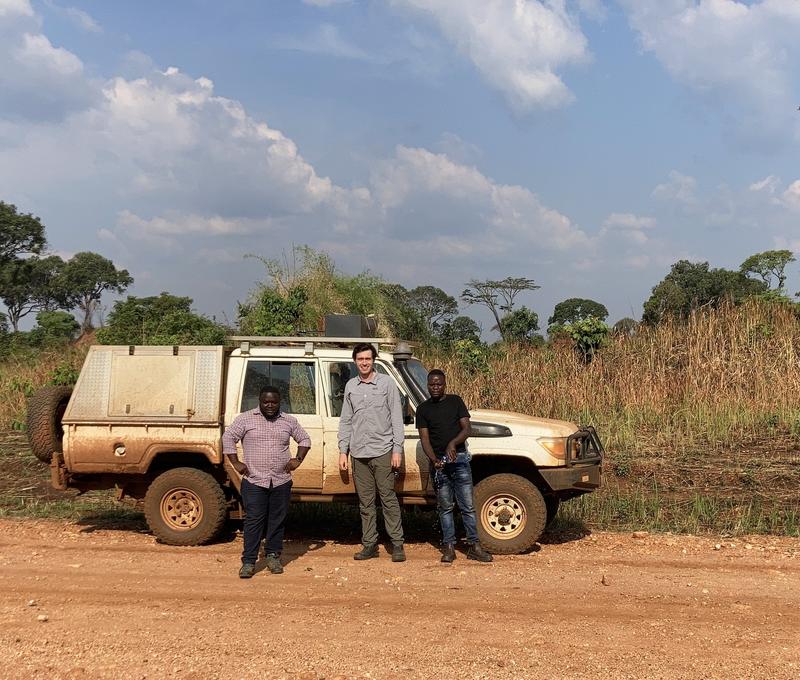
Photo credit: Dr Tobermory Mackay-Champion

